

You just launched your website.
You’ve spent weeks on the design, written your pages carefully, and maybe even done some basic SEO. Now you’re refreshing Google every day wondering — where is my website?
Here’s the honest answer most SEO blogs won’t give you: ranking a new website on Google takes time. More time than most people expect.
In this post, I’m going to break down exactly how long it takes, what the real data says, what slows you down — and what you can actually do to speed things up.
No fluff. No “it depends” without an explanation.
Table of Contents
The Short Answer: 3 to 12 Months
For a brand new website targeting competitive keywords, expect 6 to 12 months before you see consistent traffic from Google.
For low-competition keywords, you might start seeing results in 3 to 6 months.
And for a very small number of pages targeting near-zero-competition terms? Sometimes weeks — but that’s the exception, not the rule.
The most important thing to understand early: there’s a big difference between getting indexed (Google finding your site) and actually ranking (appearing on page 1). Most new site owners confuse the two.
Getting indexed is step one. Ranking is a much longer game.
What the Data Actually Says?
Let’s skip the guesses and look at real numbers.
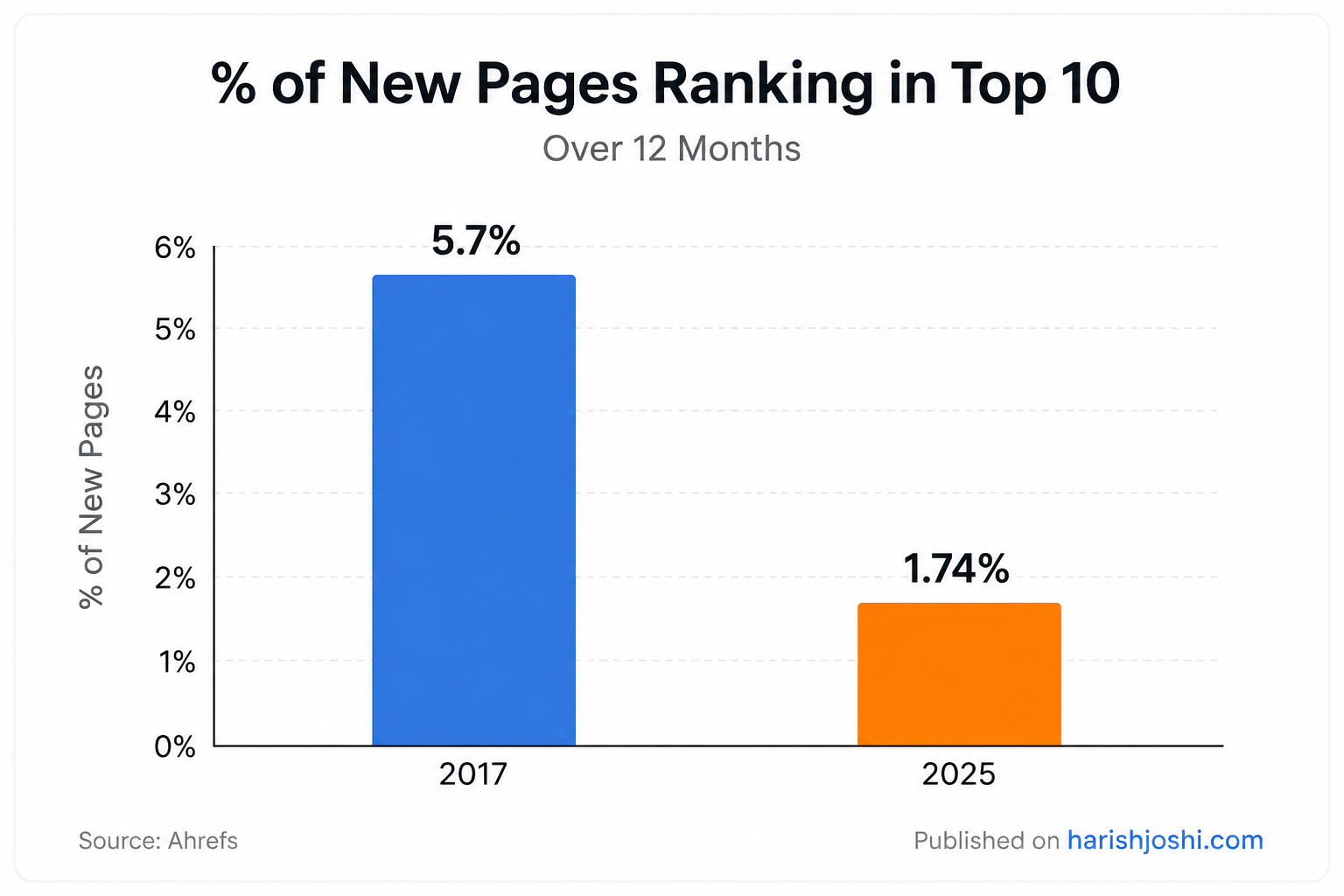
In a 2025 study by Patrick Stox at Ahrefs, over 1 million URLs published in September 2023 were tracked for a full year. The findings were stark:
- Only 1.74% of newly published pages made it to Google’s top 10 within one year
- That number was 5.7% back in 2017 — so it’s getting harder, not easier
- 72.9% of pages currently sitting in Google’s top 10 are more than 3 years old
- The average #1 ranking page is 5 years old
Let that sink in. The page ranking #1 for your target keyword has probably been live since 2020.
But there’s a silver lining from the same study: of the pages that did make it to the top 10, 40.82% got there within the first month.
This tells you something important. Early momentum matters. If your page starts gaining traction quickly – impressions, clicks, engagement – it signals to Google that your content deserves attention.
Before Rankings Come Indexing – Here’s the Difference
Before your page can rank, Google needs to find it first.
Indexing and ranking are completely different things. Here’s a rough indexing timeline:
| Website Type | Typical Indexing Time |
|---|---|
| Established high-authority site | 24–48 hours |
| Medium site with some history | 3–7 days |
| New small website | 1–4 weeks |
| Large site (100K+ pages) | Up to 6+ months for full indexing |
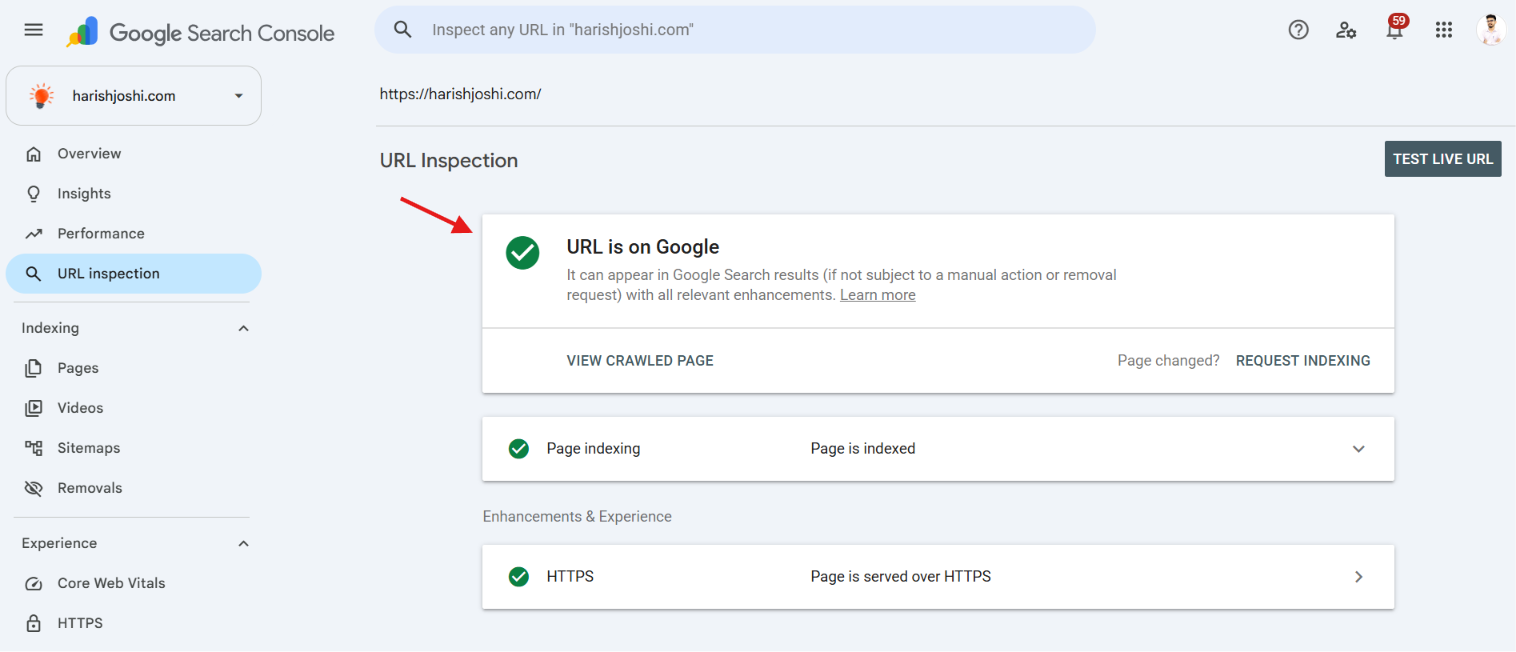
According to Google’s own Search Central documentation, the fastest way to get indexed is to submit your sitemap via Google Search Console and use the URL Inspection tool to request indexing for your most important pages.
Worth knowing: requesting indexing on the same URL multiple times doesn’t speed it up. Google processes the first request and ignores duplicates within the same crawl cycle.
What Is the Google Sandbox? (And Is It Real?)
If you’ve been researching why your new website isn’t ranking, you’ve probably come across the term “Google Sandbox.”
The theory: Google temporarily holds back new websites from ranking, no matter how good their content is.
Google has never officially confirmed it. In a 2021 Google Search Central office hours session, John Mueller said:
“In the SEO world this is sometimes called kind of like a sandbox where Google is like keeping things back to prevent new pages from showing up, which is not the case… It’s just, we don’t know and we have to make assumptions.”
So there’s no formal sandbox. But new sites still struggle to rank – and the reason is straightforward.
A brand new website has zero trust signals. No backlinks. No traffic history. No user engagement data. Google simply doesn’t know where to place you yet, so it takes a conservative approach.
Think of it like a new restaurant in your city. No reviews, no history, nobody’s heard of it. Would you trust it the same as a place that’s been packed every weekend for three years? Google thinks the same way about new websites.
The perceived “sandbox” period typically lasts 2 to 8 months, depending on your niche and how aggressively you build authority.
6 Factors That Decide How Fast You Rank
Not all websites wait the same amount of time. Here’s what actually determines your timeline.
1. Keyword Difficulty
This is the biggest factor of all.
If you’re targeting “website development” or “SEO services,” you’re competing against companies with thousands of backlinks and years of authority. You could wait 2+ years and still not crack page 1.
The answer: target long-tail keywords with 3–4+ words.
In the Semrush study of 28,000 new domains, the top-performing new websites ranked for keywords averaging 3.2–3.5 words in length — not short, broad terms.
“How to brief a web developer before starting a project” will rank before “web developer.” Every time.
2. Your Domain’s Backlink Profile (Domain Rating/Authority)
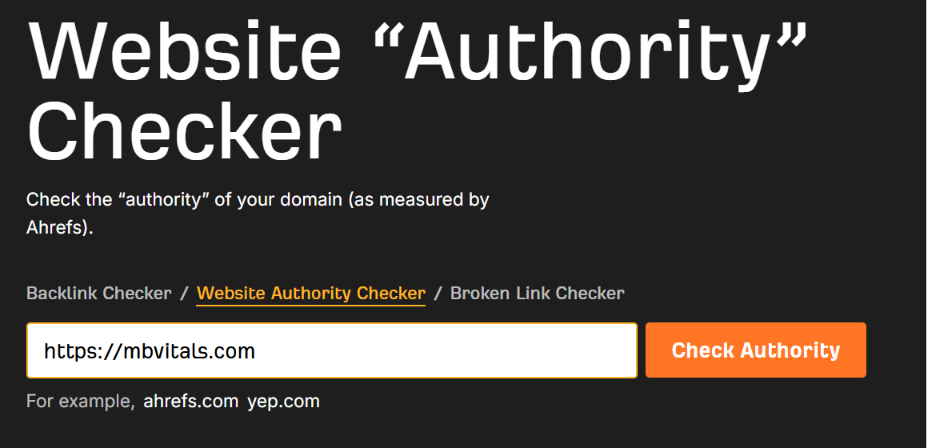
Your Domain Rating (DR) or Domain Authority (DA) reflects the strength of your overall backlink profile.
Sites with a DR of 70+ can rank a well-targeted page in weeks. If your DR is under 20 – which is normal for a new site – the same page might take 6–12 months without active link building.
The good news: you build DR over time, and even a small number of quality backlinks early on makes a real difference.
3. Content Quality and Depth
Semrush’s 2024 Ranking Factors research shows that content relevance has the strongest correlation with ranking position — stronger than backlink metrics.
And depth matters. In the same study of 28,000 new domains, content ranking in top positions was on average 3.5 times longer than lower-ranking pieces.
This doesn’t mean padding with filler. It means covering a topic completely — so the reader doesn’t need to go anywhere else after reading your post.
4. Backlinks
In the Semrush study, 92.3% of sites that ranked in the top 100 had at least one backlink. Of sites that failed to reach the top 10, 55.1% had zero backlinks.
Backlinks are still the clearest signal of trust.
You don’t need hundreds. One link from a respected website in your niche is worth more than fifty from random directories. The key is relevance and authority of the site linking to you.
5. Technical SEO Health
If Google can’t properly crawl and understand your website, nothing else matters.
Key technical factors affecting ranking speed:
- Site speed — slow sites get crawled less frequently and ranked lower
- Mobile-friendliness — Google indexes the mobile version of your site first (mobile-first indexing)
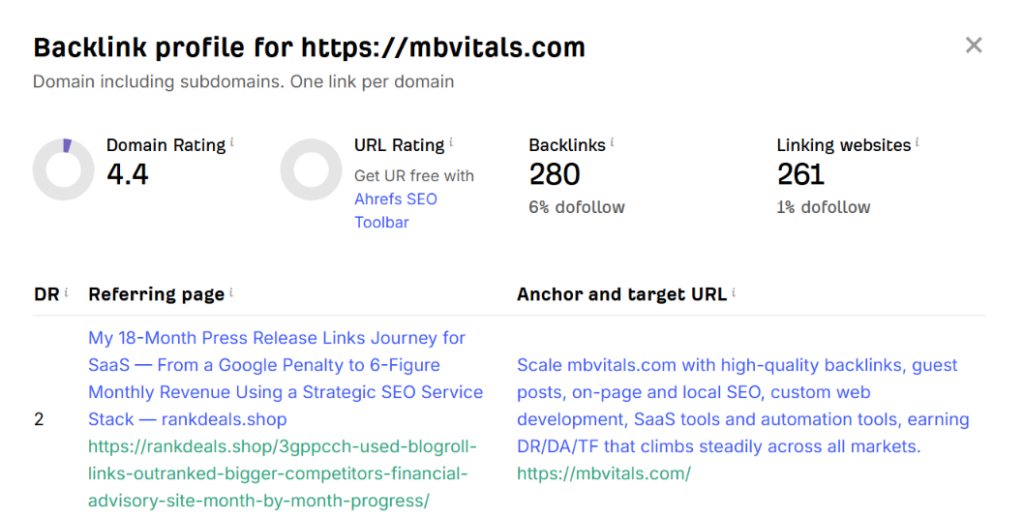
- HTTPS — a basic but non-negotiable trust signal
- Clean URL structure — helps Google understand your content hierarchy
- XML sitemap submitted — guides Googlebot to your important pages faster
Sites with better technical health get crawled more frequently, which means new content gets indexed faster. Use Google’s PageSpeed Insights (free) to check your site speed and mobile performance.
6. Niche Competition
Not all industries are equal.
A new website about handmade candles will rank faster than a new website about life insurance or cryptocurrency.
Google applies much stricter standards to what it calls YMYL topics (Your Money, Your Life) — finance, health, legal, and similar areas where bad information could genuinely harm people.
If you’re in a YMYL niche, expect a longer timeline and a much higher bar for demonstrating real expertise.
Real Timelines: What to Expect Month by Month
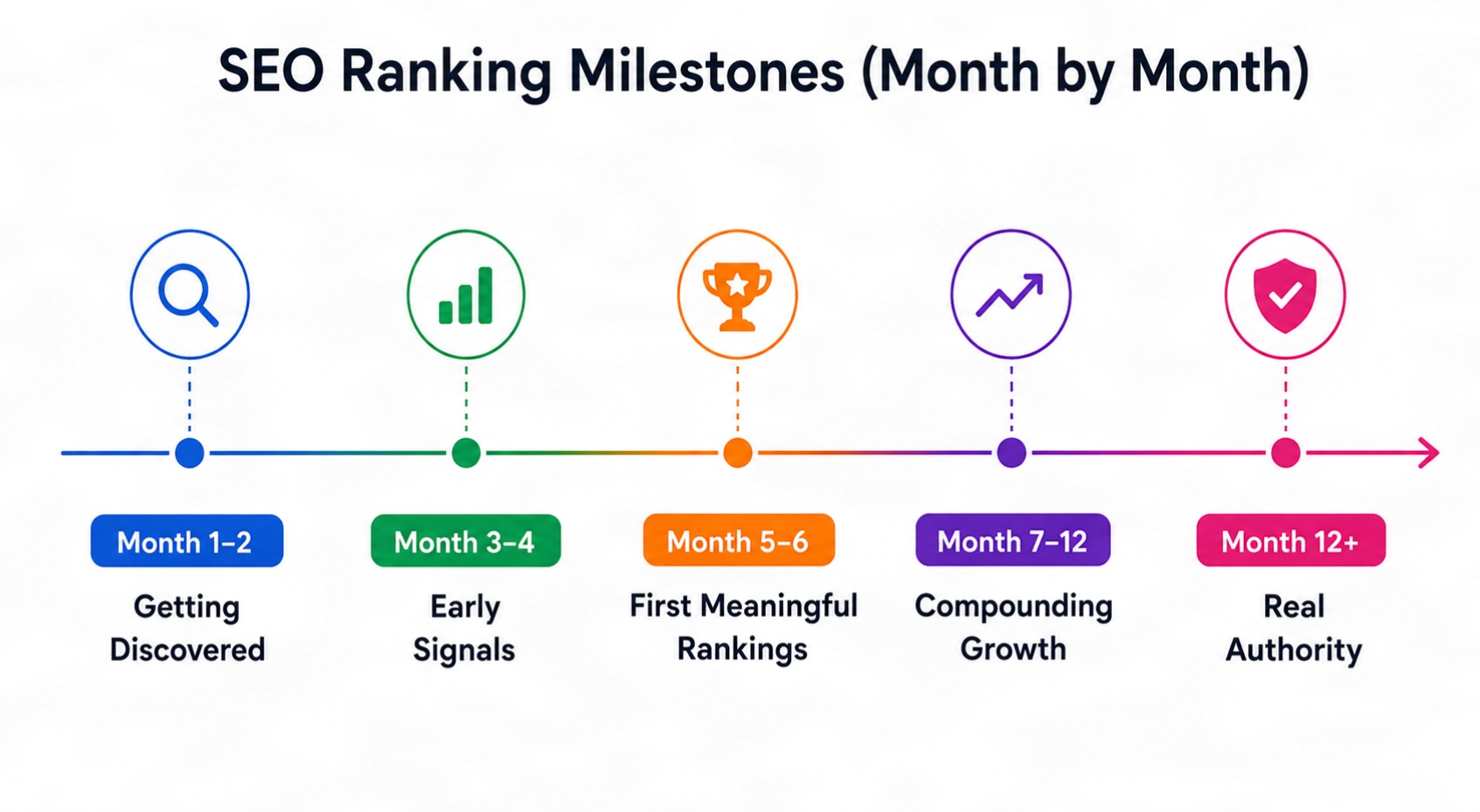
Here’s a realistic breakdown for a new website publishing consistently and doing solid basic SEO:
Month 1–2: Getting Discovered Google finds and indexes your pages. You may start appearing in Search Console with impressions — Google is showing your page in search, but you’re probably sitting on page 4–10. Almost no organic traffic yet. This is normal.
Month 3–4: Early Signals If you targeted low-competition keywords, you might start appearing on page 2–3 for some terms. Search Console impressions will be growing. Possibly a few clicks per day. Keep publishing.
Month 5–6: First Meaningful Rankings Long-tail keywords start finding their positions. Some pages may crack page 1. Traffic starts becoming noticeable. This is also when Google decides whether to keep pushing you up — or slow you down. The quality of your content and backlinks determines which direction this goes.
Important: According to the Ahrefs study, if you’re not seeing any movement by month 6, your chances of ranking without making changes become very low. Go back and update your content, add internal links, and actively pursue backlinks. Don’t just wait.
Month 7–12: Compounding Growth Pages that performed well continue climbing. You start ranking for keywords you didn’t even directly target. If you’ve been consistent, this is when SEO starts feeling rewarding.
Month 12+: Real Authority Consistent rankings, growing organic traffic, and the ability to start targeting more competitive keywords. Your domain now has enough history for Google to genuinely trust it.
Can You Rank Faster? Yes – Here’s What Actually Works
While there’s no shortcut to building genuine authority, some things genuinely speed up the process.
Start With Low-Competition Keywords
Don’t compete for broad terms on day one.
Use free tools like Ahrefs’ Keyword Generator or Google’s Keyword Planner and look for keywords with a Keyword Difficulty (KD) score under 20. Target specific questions your audience is actually asking.
A keyword with 200 searches/month and KD of 8 is more valuable to a new site than a keyword with 5,000 searches/month and KD of 75 — because you’ll actually rank for the first one.
Build Topical Authority – Not Random Posts
Google increasingly rewards websites that go deep on one topic rather than covering everything loosely.
Instead of writing random blog posts, build topic clusters: one pillar page on a broad topic, supported by several posts going deep on specific subtopics.
This signals to Google that you’re a genuine authority – not just another content site. Backlinko’s research on Google’s December 2025 core update confirmed this pattern: sites deeply focused on one topic gained rankings, while broad generalist sites lost them.
Get Your First Backlinks Early
You don’t need a big link-building campaign from day one. But a few quality links early on can dramatically accelerate how quickly Google trusts your site.
Start with:
- Guest posts on relevant blogs in your niche
- Business directory listings — especially niche-specific ones
- Mentions from partners or clients — ask anyone you’ve worked with to link to your site
- Broken link building — find pages in your niche that link to dead content, and offer your post as a replacement
Submit Your Sitemap and Use Search Console From Day One
This is free, takes 10 minutes, and is often skipped by new site owners.
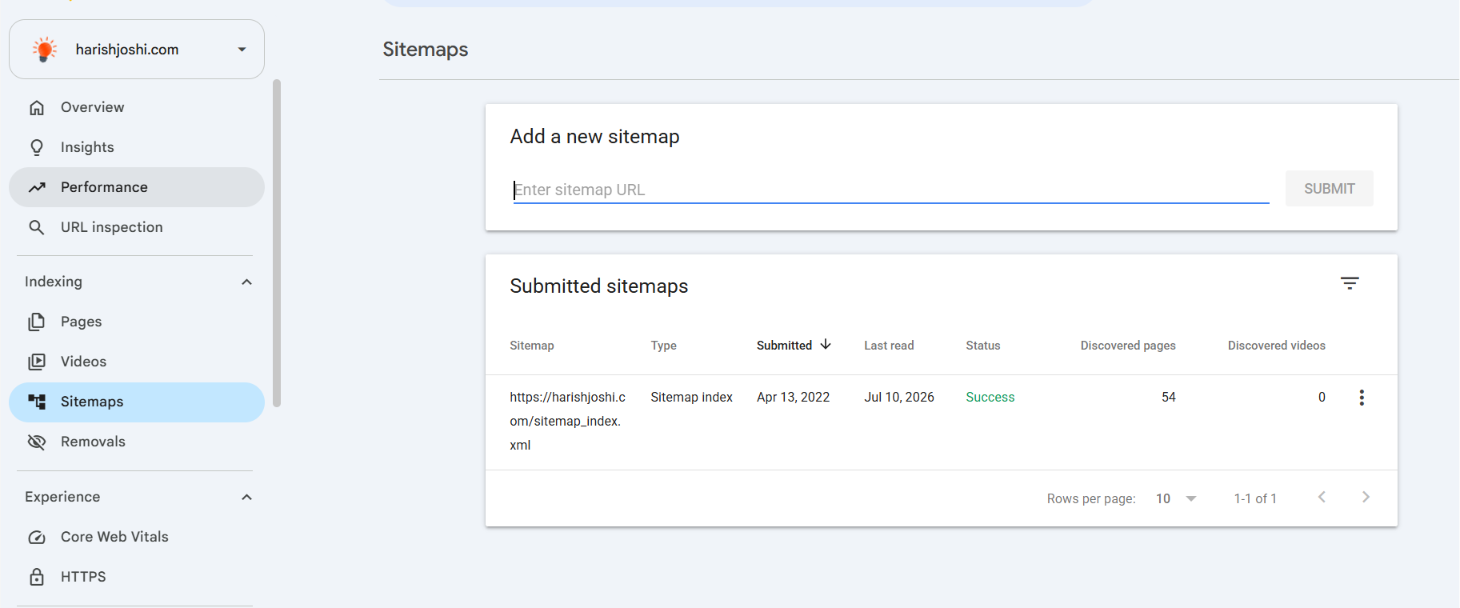
Go to Google Search Console, verify your property, submit your sitemap (usually yoursite.com/sitemap.xml), and use the URL Inspection tool to request indexing for your key pages. Per Google’s official sitemap documentation, your sitemap should be UTF-8 encoded, use absolute URLs, and be hosted at your site root to cover all pages.
Publish Consistently – and Update Old Content
The Ahrefs data is clear: older content dominates Google’s top results. The #1 ranking page is on average 5 years old. This means two things:
- Start publishing now so your content can age and accumulate signals
- Update your existing content regularly – a well-updated 2-year-old post often outperforms a brand new post on the same topic
Signs You’re On Track (Even Without Page 1 Rankings Yet)
A lot of new website owners give up too early because they don’t see traffic. But there are early signals in Google Search Console that show your SEO is working:
- Rising impressions — Google is showing your pages in search, just not at the top yet
- Improving average position — moving from position 50 to position 22 is real progress, even with no traffic yet
- Long-tail keyword traction — you start appearing for 4–5 word variations of your targets
- Increased crawl frequency — Googlebot is visiting more often (visible in Search Console’s Crawl Stats report)
These signals mean the foundation is being built. Don’t stop.
What Kills Your Ranking Chances (Avoid These)
A few common mistakes dramatically slow down — or permanently prevent — a new website from ranking.
Targeting keywords that are too competitive from day one. You’re not going to outrank Moz, HubSpot, or Neil Patel for broad terms. Start small and build up.
Publishing thin content. John Mueller said in a Reddit AMA on r/TechSEO: “Personally, I prefer fewer, stronger pages over lots of weaker ones — don’t water your site’s value down.”
One 1,500-word post that genuinely helps someone is worth more than ten 300-word posts that say nothing new.
Having zero backlinks. Content without backlinks is an island. Google can’t confidently rank something if no one else on the web is vouching for it. Even 3–5 quality links in your first 6 months makes a meaningful difference to how Google perceives your domain.
Ignoring technical issues. A slow website, broken links, or pages that aren’t mobile-friendly tell Google your site isn’t ready. Run a free check using Google’s PageSpeed Insights and Google Search Console’s Coverage report to catch issues early.
Giving up at month 3. This is the single most common mistake. Month 3 is exactly when most new sites are just getting properly indexed. Stopping here is like planting a seed and digging it up before it sprouts.
My Quick-Start Ranking Checklist for New Websites
Here’s exactly what I’d do if I were starting a brand new website today:
- ✅ Set up Google Search Console and submit my sitemap on day 1
- ✅ Use the URL Inspection tool to request indexing for my 5 most important pages
- ✅ Target only keywords with KD under 20 for the first 6 months
- ✅ Write comprehensive posts (1,500+ words) that fully answer one question
- ✅ Build 1–2 quality backlinks per month through guest posting or outreach
- ✅ Go back and update any post that hasn’t ranked after 5–6 months
- ✅ Track impressions in Search Console weekly — not just rankings
- ✅ Be patient. The compounding effect of SEO becomes visible after month 6
The Honest Truth About Ranking Timelines
I’ll be direct with you.
The Ahrefs study says only 1.74% of new pages rank in the top 10 within a year. But that doesn’t mean SEO is hopeless — it means 98% of websites are either targeting the wrong keywords, producing thin content, or not building any authority.
If you get those three things right, you’re already ahead of most of your competition.
There’s no magic number for how long it takes. The 3–6 month figure you see everywhere is real — but only if you’re doing the right things consistently. Most new websites don’t rank at all, not because SEO doesn’t work, but because they publish a few posts, get impatient, and stop.
The websites that win are the ones that stay consistent, target the right keywords, and actually help their readers.
If you do those three things and give it at least 6–12 months, you will rank.
Frequently Asked Questions
Most new websites get indexed by Google within 1–4 weeks of launch. However, appearing in search results and ranking are two different things. Ranking consistently on page 1 for competitive terms typically takes 6–12 months of focused work.
It’s possible for very low-competition, long-tail keywords with almost no existing competition. But for most keywords, 30 days is not enough time to build the trust signals Google needs to rank your pages with confidence.
Submit your sitemap to Google Search Console and use the URL Inspection tool to request indexing. According to Google’s own documentation, indexing typically takes a day or two but can take longer. Most pages on new sites appear in the index within 1–4 weeks.
The main factors are: keyword difficulty, your domain’s backlink profile, content quality and depth, technical SEO health, and niche competitiveness. Targeting low-competition keywords and building even a handful of quality backlinks can significantly cut your ranking timeline.
Google Search Console (free) is the most essential — it shows impressions, clicks, and average position for every keyword your pages appear for. Ahrefs and Semrush are paid tools that add keyword difficulty scores, backlink analysis, and competitor tracking.
Yes — because a good consultant helps you avoid the common mistakes that delay rankings (wrong keyword targeting, thin content, technical issues) and prioritizes actions that actually move the needle.
The timeline still requires patience, but a focused strategy from the start can cut months off your learning curve. If you’d like help building that strategy for your website, I’m available to work with you.
Written by Harish Joshi — Website Developer and Digital Marketing Consultant at harishjoshi.com. I help businesses get found online through well-built websites and practical SEO strategies. Questions? Reach me at contact@harishjoshi.com